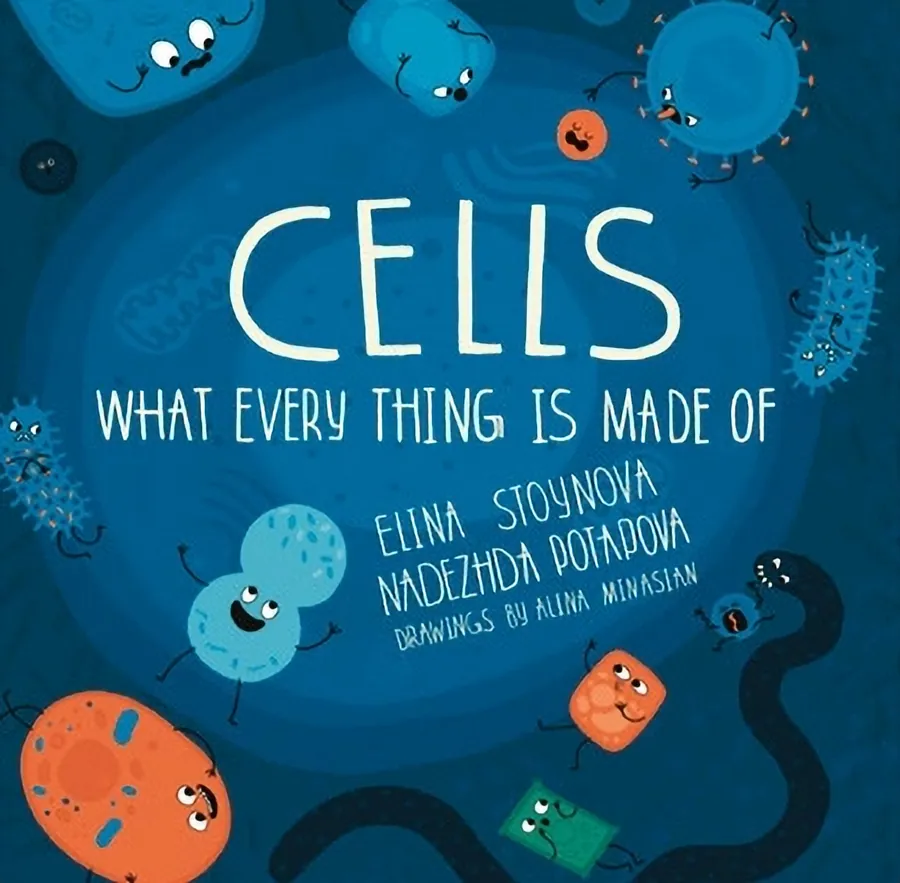
Cells:What Every Thing Is Made Of
By Elina Stoyanova and Nadezhda PotapovaIllustrated by Alina Minasian
Cells – surprisingly similar and different in all living things. The one structure that unites a human, a baobab and bacteria in yogurt is the cell. It can live alone, but also loves to gather in large groups, which amazingly make up all of us. How is this done? How does a tiny cell live? Are there differences between whale cells and algae cells? You will find answers to these and many other questions in this book.
About the book
All life on Earth is composed of cells. This fundamental unit of life exists in humans, baobab trees, cockatoos, amoebas, plus invisible bacteria.
This illustrated non-fiction book, despite being written for children, introduces some of the most complex concepts in contemporary biology. It explains cells not as flat diagrams from a textbook, but as active living systems that move, divide, cooperate, repair, protect, and sometimes attack.
Readers learn about the initial discovery of cells by scientists, current laboratory cell study methods, the dual nature of bacteria (beneficial and harmful), the process of oxygen production by plant cells, and the mechanisms by which viruses hijack other cells. The book also introduces stem cells, antibiotics, CRISPR-Cas9, cell cultures, and bio-factories, showing how microscopic processes are connected to medicine, agriculture, and future technologies.
“Cells” can act as an enriching addition to the school biology curriculum. It gives curious children a broader view of the subject and offers a friendlier route into science for readers who find textbooks dry or intimidating. Complex concepts are explained through vivid comparisons, clear illustrations, and precise, simplified language.
The book explores life from its most fundamental level. It shows that the cell is not a simple building block, but a entire world of questions, discoveries, and possibilities.
For your acquisition meeting
Why this title makes commercial sense
A microscopic world with big stories
The book shows cells not as abstract school diagrams, but as active living systems that move, divide, cooperate, protect, break down and change.
Science made clear for young readers
Difficult ideas such as stem cells, gene editing, cell cultures and viruses are explained through vivid comparisons and carefully simplified scientific language.
For curious and reluctant science readers
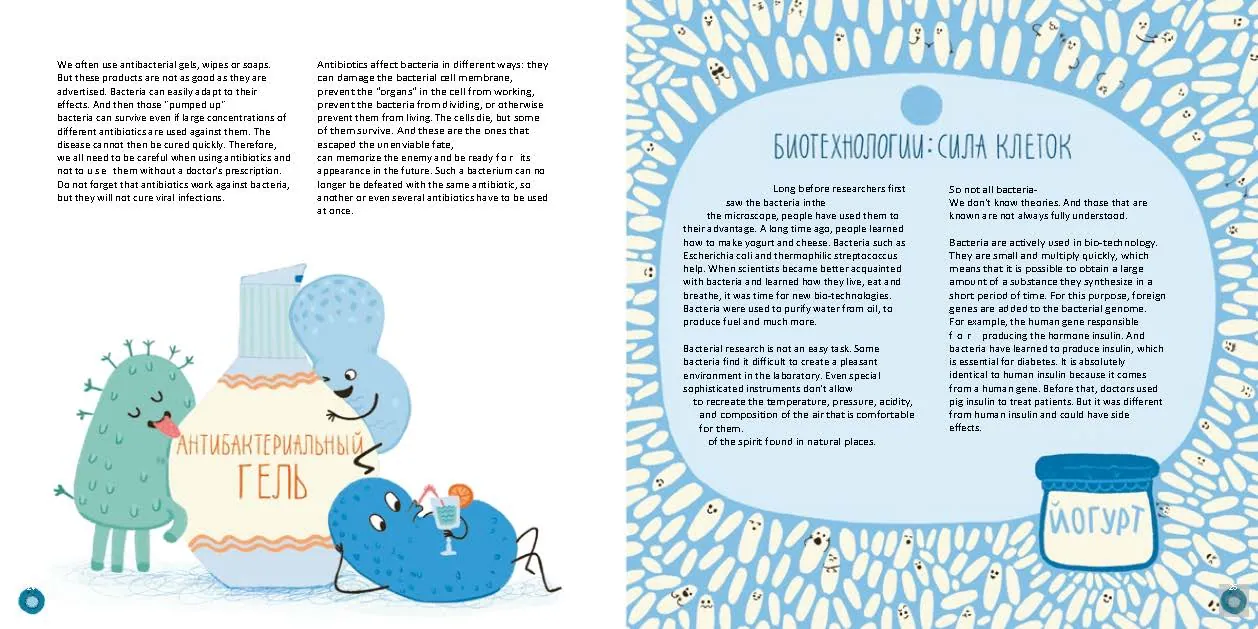
Some children love biology from the first lesson. Others need another way in. This book offers that route through humour, vivid comparisons and expressive illustrations. It keeps the science accurate while making the subject feel less formal and more alive.
Inside the book
Similar titles
Explore the book and its rights potential
Artwork, story and approach — in the complete review PDF.