
Children's non-fiction books
that inspires and educates
ISBN
978-5-906994-56-1
Age
7+
Pages
64
Rights
sold to China
TO THE MOUNTAINS!
by
Lada Bakal
illustrations:
Tatyana Ukleiko
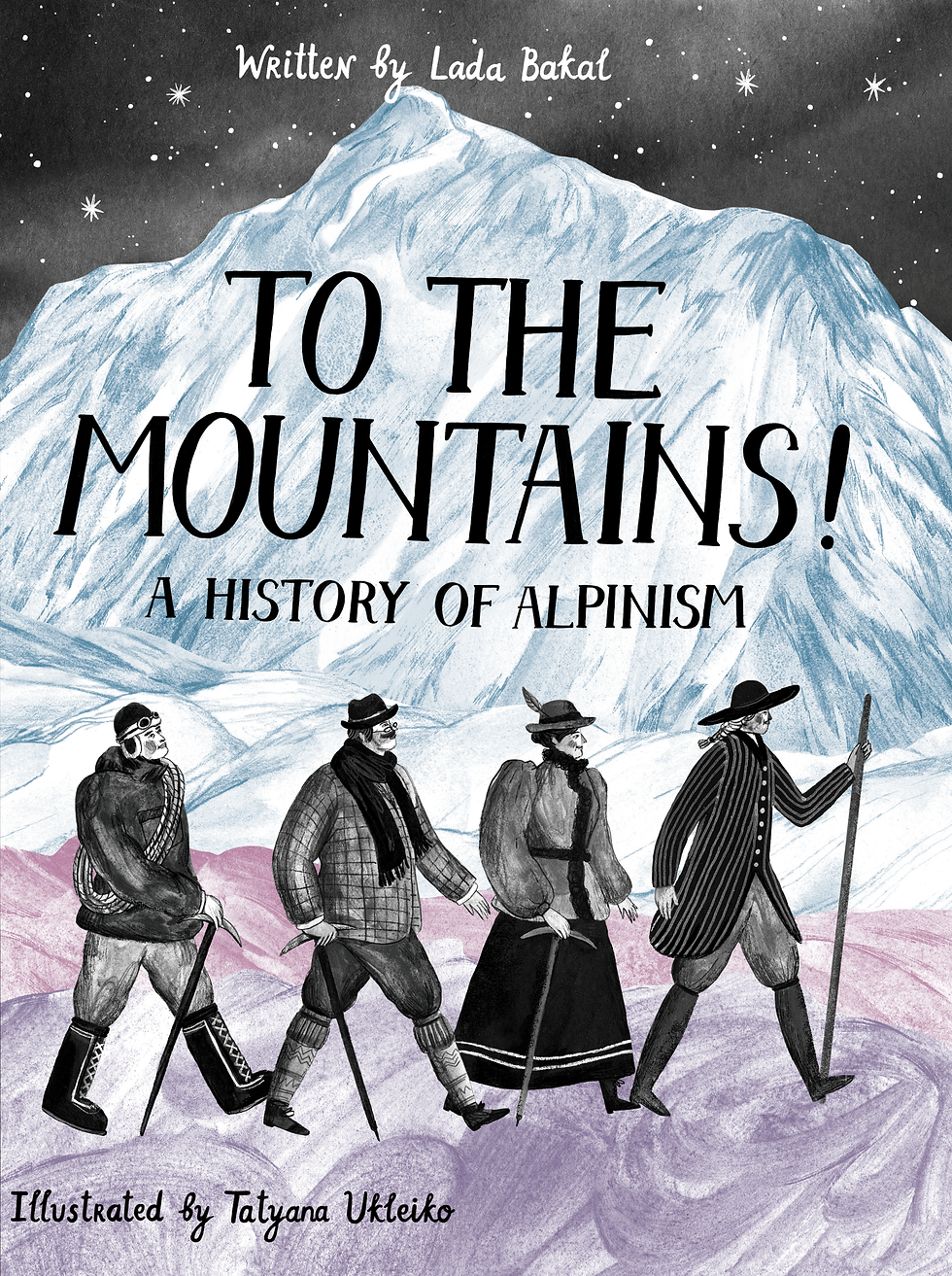
For anyone who has marveled at mountain beauty, “To the Mountains: A History of Alpinism” offers a compelling read. Adults and children alike know this feeling. That mountain summit, viewed from afar, can present itself as both proximate and distant. It invites the eye first. Then it begins to stir the imagination.
Humans inhabited areas near mountains for ages, traversing them when necessary. Peaks marked borders. They protected cities. They shaped routes and legends. Their summits still remained mysterious.
The book begins with a simple question. Why did people decide to climb higher than necessary? From this question grows a story about curiosity, science, and the need to test human limits. The book chronicles mountaineering’s progression, detailing its origins in early Alpine ascents and subsequent ventures into the Caucasus, Himalayas, and Everest.
The book, progressing through its narrative, details mountain formation processes and the reasons behind life’s adaptations at varied elevations. It shows what climbers carry, how expeditions are organised and what makes the highest peaks so difficult to reach. The facts are woven into human stories. Scientists, guides, women climbers, and record-breakers appear as real people driven by patience, courage, and wonder.
Tatiana Ukleyko’s illustrations give the book a strong visual rhythm. The clear chapter structure makes it easy to read from beginning to end or open at any spread. This is a book about geography, exploration, and the lasting pull of the unknown.
Mountains are instantly recognisable to readers everywhere. They belong to local landscapes and global imagination at the same time. This gives the book strong potential across markets, especially for publishers looking for non-fiction with a broad cultural reach.
The book turns science into a story. Geology, climate, and expedition equipment are explained through the experiences of climbers and explorers. Young readers receive reliable knowledge through scenes they can follow and remember.
The visual format makes the title suitable for school libraries, museum shops, and family reading. It has the feel of a gift book while remaining useful, informative, and easy to position in children’s non-fiction.


